
Protecting Your Brain: What the Latest Science Teaches Us About Memory Loss and Alzheimer’s Disease
A conversation about brain health, memory, prevention, and the many factors that influence long-term cognitive resilience.
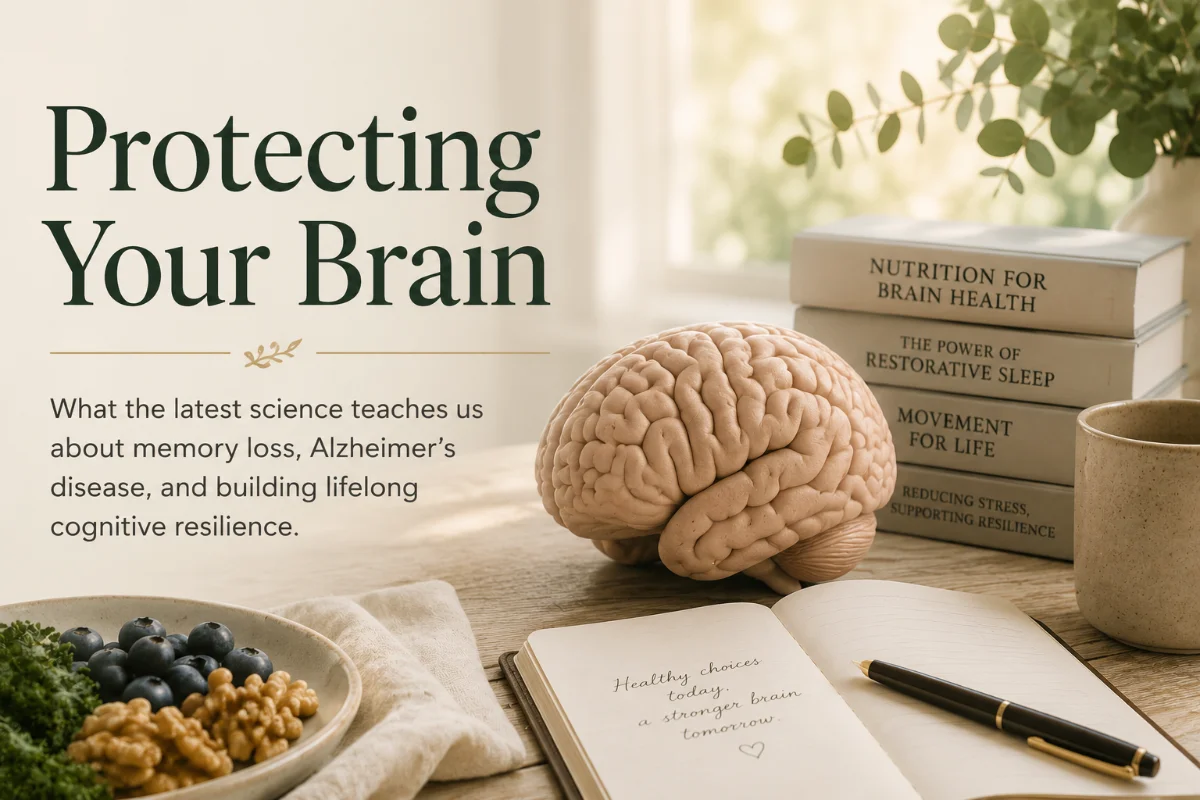
A Conversation About Your Brain Health
In my practice, I often sit with patients over the age of 50 who share the same concern: “I’m worried about my memory.” Perhaps you’ve noticed that recalling names takes a little longer than it used to, or maybe you’re carrying the weight of a family history of Alzheimer’s disease. Those concerns are understandable — but they do not have to define your future.
For many years, we viewed Alzheimer’s disease as an unavoidable consequence of aging or genetics. Today, research paints a much more hopeful picture. While genetics certainly influence risk, they are only one piece of a much larger puzzle. Your brain is a living, dynamic organ that responds to how you eat, sleep, move, manage stress, and care for your overall health. In many ways, brain health is something we can actively support throughout life.
Understanding Memory: Normal Aging vs. Cognitive Concerns
It’s perfectly normal to occasionally forget where you left your keys or struggle to remember a name that comes to you a few minutes later. Normal aging may slow processing speed slightly, but it should not significantly interfere with daily life.
Alzheimer’s disease and other forms of cognitive impairment are different. They involve progressive changes that affect memory, reasoning, language, and the ability to perform everyday activities.
One of the most exciting advances in medicine is that we no longer view Alzheimer’s disease as a condition caused by a single problem. Instead, growing research suggests that cognitive decline often results from multiple factors working together. These may include chronic inflammation, insulin resistance, poor blood flow, nutrient deficiencies, hormone imbalances, infections, environmental toxins, sleep disorders, chronic stress, and even poor oral health.
Rather than simply waiting until symptoms become severe, we can now use comprehensive evaluations — including cognitive testing, laboratory studies, imaging when appropriate, and emerging biomarkers — to better understand what may be influencing brain function and identify opportunities for early intervention.
How Is Alzheimer’s Disease Diagnosed?
Diagnosing Alzheimer’s disease has evolved dramatically over the past decade. Traditionally, physicians relied primarily on memory testing and clinical symptoms. Today, we have many more tools available.
Depending on the situation, an evaluation may include cognitive assessments, comprehensive laboratory testing, brain imaging, and newer blood biomarkers that can help identify changes associated with Alzheimer’s disease. Just as importantly, these evaluations help us look beyond the diagnosis itself by identifying underlying contributors — such as inflammation, insulin resistance, vascular disease, thyroid disorders, vitamin deficiencies, hormonal imbalances, sleep apnea, medication side effects, depression, and other potentially reversible factors that may be affecting brain health.
Rather than simply diagnosing memory loss, our goal is to understand why the brain may be struggling. By identifying these modifiable factors early, we have greater opportunities to create a personalized plan to support long-term cognitive health.
A New Way of Thinking About Brain Health
One of the biggest shifts in Alzheimer’s research is the realization that cognitive decline is often influenced by multiple interconnected factors rather than a single cause.
Think of your brain like a garden. Healthy plants need fertile soil, adequate sunlight, water, and protection from weeds and pests. If several of those conditions deteriorate at once, the garden begins to struggle.
The brain works much the same way.
Inflammation, poor blood sugar control, inadequate blood flow, hormonal changes, nutrient deficiencies, toxins, infections, sleep disorders, chronic stress, and physical inactivity can all place stress on the brain over time. Every individual has a different combination of these factors, which is why a personalized approach to prevention and treatment is so important.
Modern laboratory testing can often identify many of these contributors before significant symptoms develop, allowing us to create a roadmap for improving long-term brain health.
Nutrition for a Healthy Brain
Nutrition plays a central role in supporting cognitive health. One of the most consistent themes emerging from research is that the brain thrives when blood sugar levels remain stable and inflammation is minimized.
A brain-healthy eating pattern emphasizes colorful vegetables, healthy fats, quality protein, nuts, seeds, legumes, herbs, spices, and foods rich in antioxidants and phytonutrients. These foods help nourish brain cells while supporting healthy blood vessels and reducing inflammation.
Limiting added sugars, refined carbohydrates, ultra-processed foods, and excessive alcohol may also help support healthy brain aging.
Many experts also recommend avoiding late-night eating. Giving the body several hours between dinner and bedtime supports healthy metabolism and allows the brain to perform many of its nightly repair and housekeeping functions during sleep.
Exercise: One of the Best Medicines for the Brain
If there were a medication that produced all the benefits of regular exercise, it would likely become one of the most widely prescribed treatments in medicine.
Exercise improves blood flow to the brain, stimulates the production of Brain-Derived Neurotrophic Factor (BDNF) — a protein that helps neurons grow, repair themselves, and form new connections — and supports lifelong cognitive function.
Regular aerobic exercise has consistently been associated with better memory and a lower risk of cognitive decline.
Strength training is equally important. Maintaining muscle mass improves insulin sensitivity, reduces inflammation, supports healthy blood vessels, and has been associated with better preservation of brain volume as we age. I especially encourage patients to prioritize leg strength because healthy muscles are among the body’s most powerful tools for promoting healthy aging.
Sleep: Your Brain’s Nightly Housekeeper
Sleep is far more than simply rest — it is one of the brain’s most important repair processes.
During deep sleep, the brain activates a specialized waste-clearance network called the glymphatic system. This system helps remove metabolic waste products, including proteins associated with Alzheimer’s disease.
Poor sleep, untreated sleep apnea, and chronic sleep deprivation have all been linked to an increased risk of cognitive decline.
Protecting your sleep may be one of the simplest — and most powerful — investments you can make in your long-term brain health.
The Mind-Body Connection
Brain health extends well beyond diet and exercise.
Activities that combine physical movement, mental engagement, and social interaction appear to provide especially strong cognitive benefits. Ballroom dancing, for example, challenges memory, coordination, balance, and social connection simultaneously.
Practices such as yoga, Pilates, and Tai Chi improve strength and balance while helping regulate the nervous system and reduce chronic stress.
Meaningful relationships, lifelong learning, spending time in nature, volunteering, reading, learning new skills, and maintaining a sense of purpose all contribute to building what researchers call “cognitive reserve” — the brain’s ability to remain resilient despite the normal changes of aging.
Reasons for Hope
Perhaps the most exciting development in brain health is that our focus is shifting from simply reacting to Alzheimer’s disease after it develops toward identifying risk factors much earlier and supporting brain health proactively.
While newer medications may have a role for carefully selected patients, they primarily target one aspect of Alzheimer’s disease. Growing evidence suggests that a comprehensive strategy addressing multiple contributors — including nutrition, exercise, sleep, metabolic health, inflammation, vascular function, hormone balance, oral health, and other individualized risk factors — may provide a broader approach to supporting long-term cognitive health.
This shift gives patients something medicine has not always been able to offer: hope grounded in science.
Your Brain Is More Adaptable Than You Think
One of the most remarkable discoveries in neuroscience is neuroplasticity — the brain’s ability to adapt, form new connections, and continue learning throughout life.
While no single intervention can guarantee prevention of Alzheimer’s disease, we know that the brain responds to the environment we create through our daily choices. Healthy nutrition, regular exercise, restorative sleep, stress management, meaningful relationships, lifelong learning, and addressing underlying medical conditions all contribute to a healthier, more resilient brain.
It is never too early — or too late — to begin investing in your brain health.
Next Steps
If you have concerns about your memory, a strong family history of dementia, or simply want to be proactive about protecting your brain, don’t wait until symptoms become severe.
A comprehensive evaluation can help identify many of the modifiable factors that influence cognitive health, allowing us to develop a personalized plan based on your unique biology and risk profile.
The most encouraging message I can leave you with is this: your brain health is not determined by a single gene or a single diagnosis. It is influenced by dozens of factors — many of which are within your control.
Every healthy meal, every walk, every good night’s sleep, every meaningful conversation, and every effort you make to care for your body is also an investment in your brain.
Your future brain is being shaped by the choices you make today.